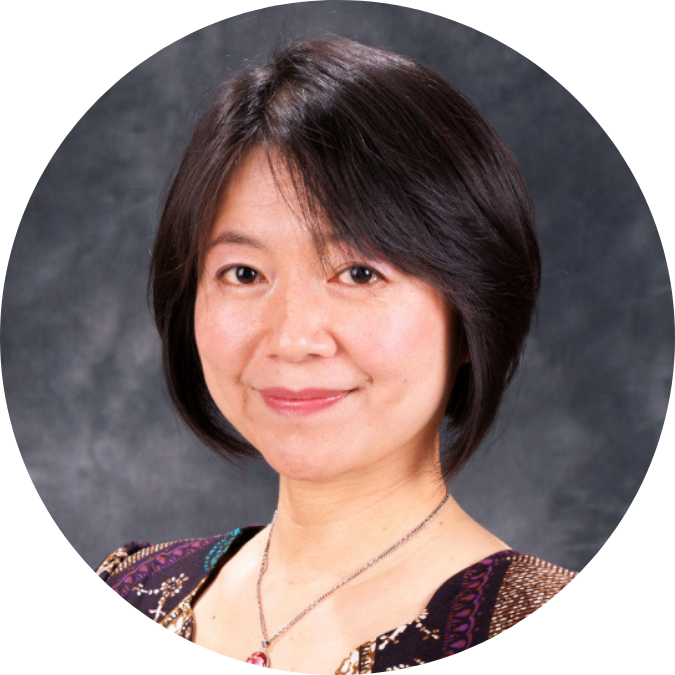
Keiko Goto
California State University, Chico, United States
Keiko Goto is originally from Japan. She was born in Gunma Prefecture, which is famous for hot springs and tough women. She holds a B.S. in food science and technology from Kyoto University, an M.S. in nutrition from UC Davis, and a Ph.D. in nutritional sciences from Cornell University. As a nutritionist, Keiko has worked in various countries such as Guatemala, Indonesia, Jamaica, the Philippines, and Tanzania, and has developed a deep appreciation of diversity in people and food. Keiko’s current research interests include food and culture, international nutrition, food behavior and mindful eating, and the application of community-based participatory research methods in food and nutrition. She enjoys traveling, playing piano, cello and clarinet, pairing wine with foods, and playing pickleball and ping-pong.
“COIL is an equity-minded approach that supports students in developing the skills to work with and understand individuals from diverse backgrounds. Through my scholarship of teaching, I have observed its effectiveness, as students’ cultural competency significantly improved across disciplines, identities, and backgrounds. A food-based COIL approach provides a particularly accessible and effective way to engage with diversity. Food can tell stories about diversity in the US and also helps challenge stereotypes. For example, international students’ perceptions of Americans shifted after hearing real food stories from diverse U.S. students.”
Project Information
Project Name: Food Product Analysis and Development
Partner: Sebastian Navas, Universidad San Francisco de Quito (Ecuador)
Project Length: Project started in Fall 2000
Modality: Synchronous & Asynchronous
Technology Tools Utilized: Zoom, Padlet
UN Sustainable Development Goals: Good Health and Well-being, Responsible Consumption and Production
Project Summary:
The primary objective of this project is to understand how a food item is grown, how it travels, and who handles it before it reaches consumers in Ecuador and other countries. The secondary objective is to examine how the food is consumed by people in Ecuador, the United States and other countries. The third objective is to develop an innovative “global” recipe and a flyer for nutrition education among a selected target population in Ecuador.
Learning Outcomes:
- To understand the history of a food item from Ecuador
- To learn where the food item is grown, how it travels, and who handles it before it reaches consumers in Ecuador and other countries
- To learn how Ecuadorians consume the food item in Ecuador
- To understand how globalization has influenced the farmers, consumers and other stakeholders in Ecuador
- To investigate how the food item is consumed in different cultures/regions of the United States
- To investigate nutrition-related issues in Ecuador To develop healthy recipes for a target population in Ecuador using the food item
Some specific COIL-related outcomes are as follows:
- To learn an intercultural collaborative approach to global food product analysis and development
- To understand how students’ own background influences what they see and how they see it
- To learn to listen to other ways of viewing global food and nutrition
- To consider further study of international issues and participate in international programs such as Study Abroad